
Casale del Giglio

The historic estate is a hot spot for ancient roman artifacts
Casale del Giglio
Located in the Agro Pontino Valley about 50 km south of Rome, Casale del Giglio is the estate that transformed Lazio from a region known for bulk table wine into a contender on the global stage. Founded in 1967, the winery has become an icon of Roman viticulture, proving that the coastal plains of Le Ferriere could produce world-class wines.
The Santarelli family’s history with wine dates back to 1914 when Berardino Santarelli founded a wine merchant business in Rome. However, the modern era of the estate belongs to his son, Dino Santarelli. In 1967, Dino was fascinated by the “uncharted territory” of Agro Pontino. At the time, the area was largely reclaimed marshland and not considered a serious viticultural site. Dino realized that the lack of tradition in the area was actually an advantage—it meant there were no restrictive rules. In 1985, along with his son Antonio, he launched a massive scientific research project to determine which grapes would actually thrive in this specific microclimate.
The estate’s philosophy is guided by Antonio Santarelli and long-time enologist Paolo Tiefenthaler and their approach is defined by two distinct phases: Experimental and Native rediscovery. The Santarelli’s planted nearly 60 different grape varieties in an experimental vineyard to see which interacted best with the sandy, mineral-rich soils and the sea breezes of the Tyrrhenian Sea. This led to the successful introduction of international varieties like Syrah, Petit Verdot, and Viognier.
Once they established the region’s potential with international grapes, the philosophy shifted toward “reclaiming” Lazio’s heritage. They have since focused on elevating indigenous grapes that were once forgotten like Bellone & Cesanese. Additionally; Biancolella di Ponza, a very unique project on the island of Ponza which has served to rescue an ancient variety originally brought by Bourbon settlers from the mainland who planted these vines on steep volcanic sea cliffs during the 1700s.


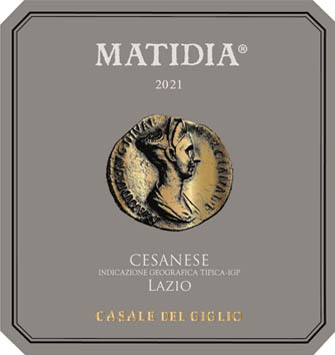
click label for technical details
